
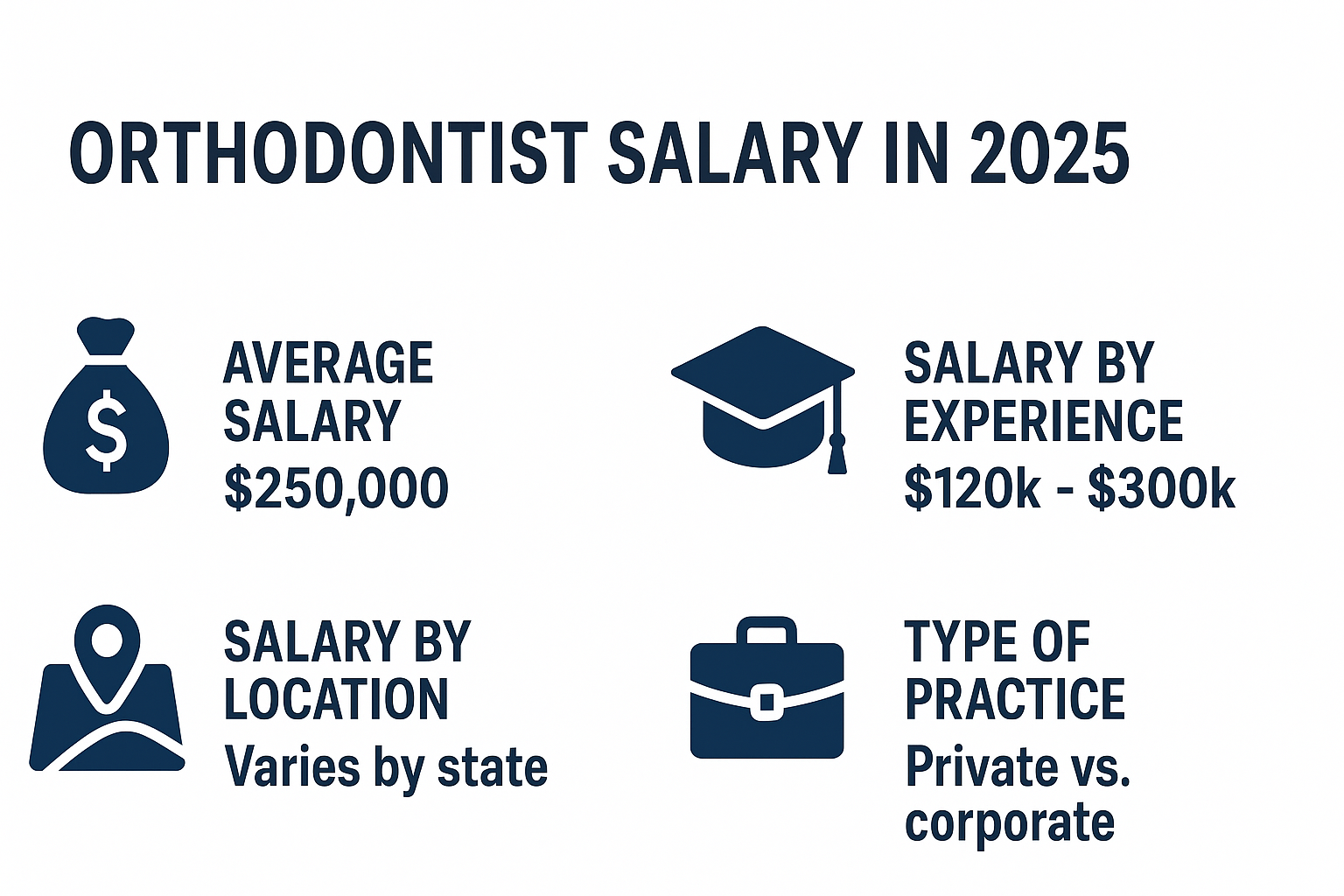
Understanding Orthodontist Salary in 2025
Orthodontics continues to be one of the most lucrative dental specialties. But exactly how much do orthodontists earn in 2025, and what factors drive their income levels? In this comprehensive guide, we’ll explore updated salary figures, experience-based progression, geographic variation, and how education debt impacts financial planning.
2025 Orthodontist Salary Overview
-
ZipRecruiter (Sept 2025): The average orthodontist earns about $309,402 annually, equating to $148.75 per hour. The majority earn between $250,000 and $374,500, with top earners (90th percentile) reaching around $388,000 ZipRecruiter.
-
Bureau of Labor Statistics (via Becker’s Dental, April 2025): Reports an average annual salary of $254,620, or about $122.41 per hour beckersdental.com.
-
PayScale (2025 data): Indicates an average salary of $220,704, with a median of $95,000 and a high range up to $360,000 Payscale.
-
Glassdoor (Sept 2025): Estimates an average of $265,883 per year, ranging from $208,772 (25th percentile) to $342,927 (75th percentile) Glassdoor.
These numbers highlight how variance in data sources can reflect different reporting populations—actual income likely falls within the $220k–$310k range, depending on experience, specialization, and location.
Salary Breakdown: Experience, Location & Practice Type
Experience Level
-
Entry-Level Orthodontists: Often start around $120,000–$160,000 annually.
-
Mid-Career (5–10 years): Typically earn $200,000–$250,000.
-
Senior/Practice Owners: Can exceed $300,000, with some data pointing toward $350,000–$400,000+ learn.renewdigital.com.
Geographic Differences
-
Top-earning States: Orthodontists in regions like Alaska, Massachusetts, and Connecticut tend to command higher pay.
-
Metro insights: In Northeast Ohio (Cleveland area), orthodontists average $239,200 annually, ranking among the top five metro areas nationally Axios.
-
Urban vs. Rural: Urban areas offer higher demand and pay, but rural locations may offer lower overhead and less competition.
Practice Model
-
Private Practice Owners: Highest revenue potential, but also bear significant operating costs.
-
Corporate/DSO-employed: In-office orthodontists enjoy stable pay and reduced administrative duties.
-
Locum Orthodontists: Temporary orthodontists can earn up to 62.5% more per hour than full-time associates in high-demand areas bartonassociates.com.
Trends Influencing Orthodontist Salary in 2025
-
Rising Average Salaries: According to a 2025 dental salary survey, specialists—owners and associates combined—earned an average of $320,615, up nearly 7% from 2023 amplify360.com.
-
Demand Growth: Orthodontic job openings are growing, with projected demand increasing 6% from 2018 to 2028 Zippia.
-
Technological Impact: Adoption of digital workflows, 3D printing, and advanced appliances is boosting productivity and patient volume—and thereby income learn.renewdigital.com.
Education Costs and Financial Planning
Tuition and Loan Burden
Becoming an orthodontist involves substantial tuition costs—often exceeding $300,000. Graduates frequently carry high student loan debt, affecting early-career financial flexibility.
Budget and Repayment Strategies
-
Refinancing to lower interest rates
-
Exploring loan forgiveness programs for dental professionals
-
Structuring repayment schedules aligned with income growth
Despite the debt, most orthodontists find the long-term income justifies the investment.
How to Maximize Your Orthodontist Salary
-
Continuing Education: Stay updated with latest technologies and treatments to increase patient retention and referrals.
-
Specialization: Procedures like surgical orthodontics or pediatric-focused practice can boost revenue.
-
Negotiation: Especially for associates—knowing your worth can yield better compensation packages.
-
Ownership Transition: Moving from associate to owner increases income potential significantly.
-
Location Strategy: Consider markets with high demand but less saturation.
-
Efficiency & Technology: Investing in technology can streamline workflows and elevate patient throughput.
Conclusion:
Absolutely. The orthodontist salary landscape shows strong income potential, with averages ranging from $220,000 to over $300,000, depending on numerous factors. While the path to becoming an orthodontist involves education costs, the return on investment remains high—especially with strategic career planning.
For a professional orthodontic perspective—including career guidance and orthodontic technology insights—consider consulting experts at Dental Angels.
Explore the 2025 orthodontist salary landscape—national averages, regional differences, education debt, and career progression. Learn how experience, location, and type of practice impact earnings.


